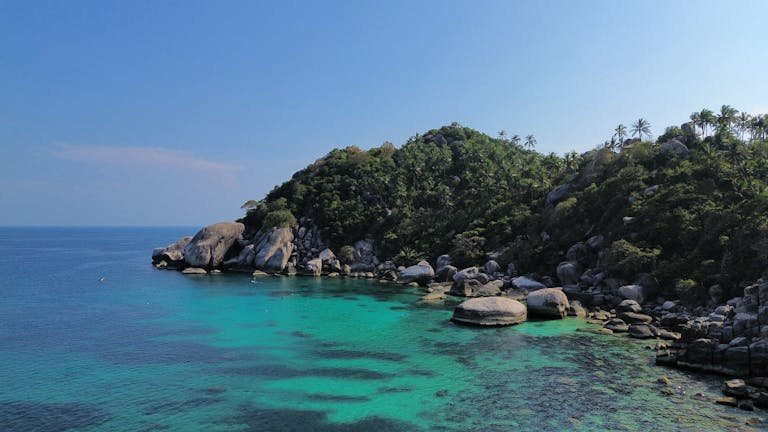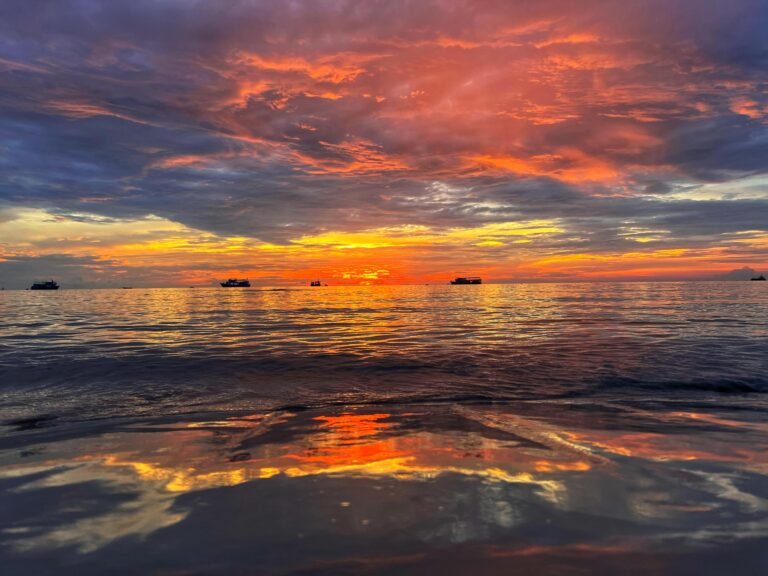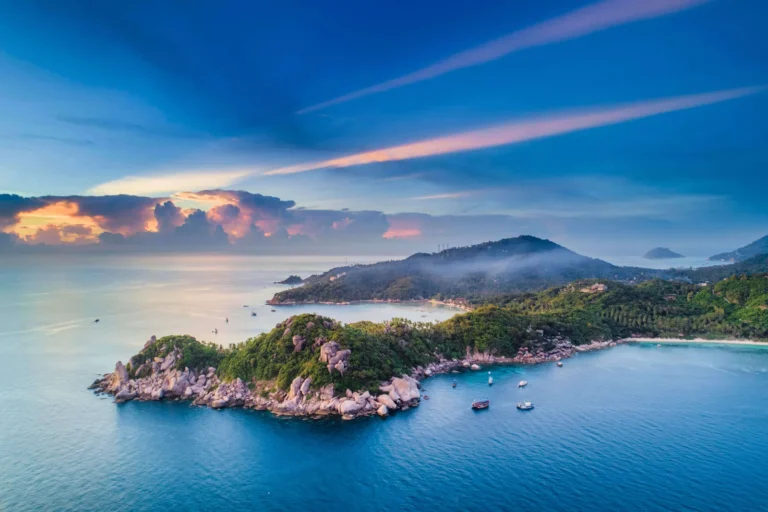
Koh Tao is one of the cheapest places in the world to get scuba certified (PADI, SSI or RAID) and one of the best places to actually dive.
Somewhere between 60 and 80 dive schools operate on a 21 km² island. Open Water courses start from about 9,000 THB. Visibility regularly hits 30 metres in high season. And between March and May, the whale sharks show up. This is the honest breakdown of diving Koh Tao: the costs, the sites, the schools worth trusting, and the questions nobody answers properly online.
We run a hostel here and watch hundreds of guests start their first dive every month. This guide is what we wish they’d read before they arrived: not the cert sales pitch, not the over-polished brochure. Just the facts. For the wider context on the island, start with our complete Koh Tao guide. Then work through the sections below: costs first, then sites, then picking a school.
An Open Water course on Koh Tao runs roughly 9,000 to 13,000 THB over about 3 days, whether you go SSI, PADI or RAID. The agency matters far less than the shop: the cheapest course on the island and one of the dearest are both SSI. A one-day Discovery Dive is around 2,500 THB. Certified fun dives are usually sold as a two-dive day trip, 1,800 to 2,400 THB. Best dive sites: Sail Rock, Chumphon Pinnacle, and White Rock. Best months: March to May for whale sharks and visibility that can reach 30 metres. No swimming experience needed, but some comfort in water helps.
Table of Contents
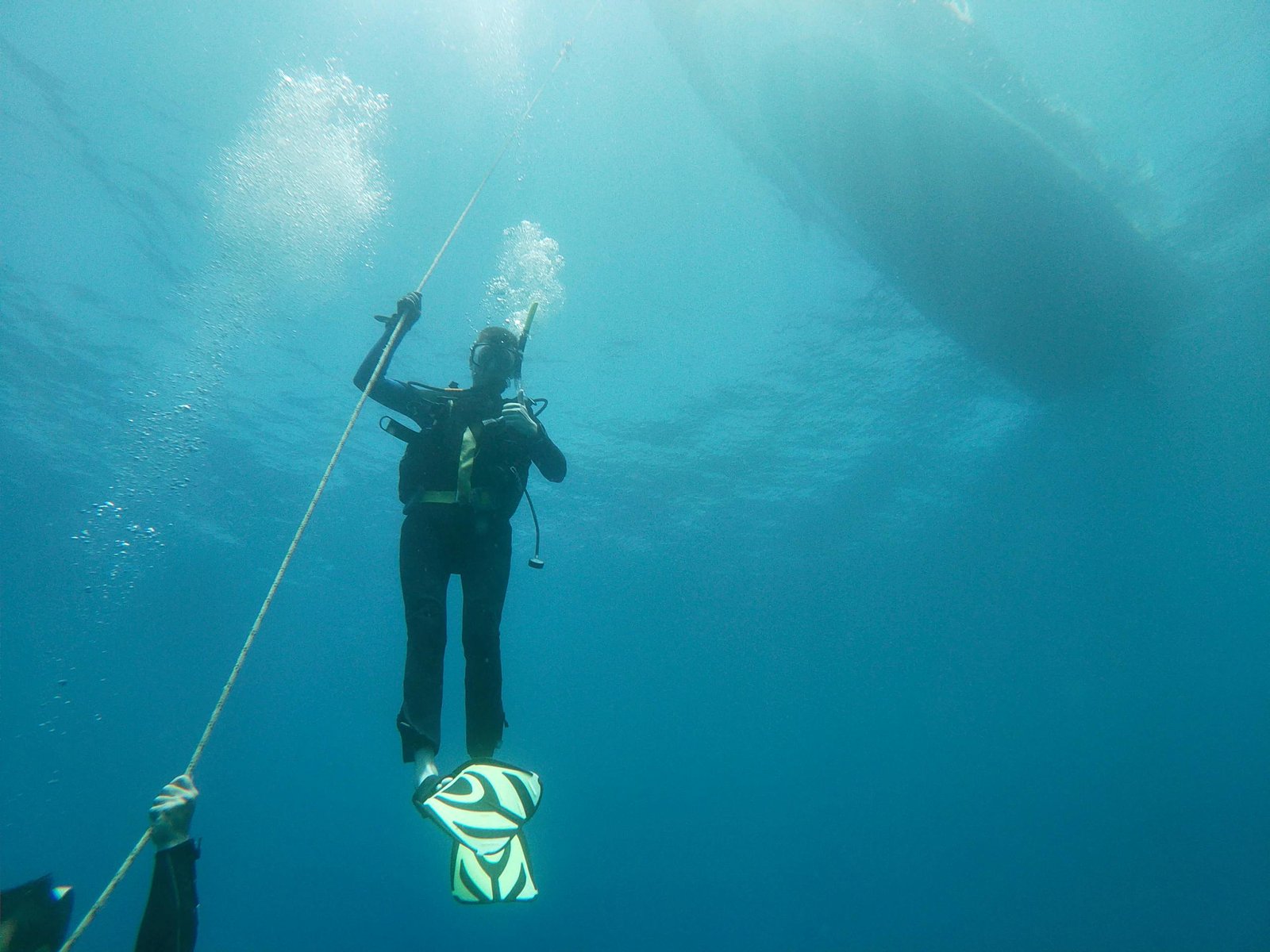
Why Koh Tao Is World-Famous for Diving
Three reasons stacked on top of each other. First, the marine life density: Koh Tao sits in the Gulf of Thailand on a reef system that packs more species into a small area than most places you’ll dive. Turtles, reef sharks, barracuda, and whale sharks all show up regularly, alongside coral that’s still alive across most of the main sites. Second, the price: dozens of dive schools clustered on one island creates competition, which is why certification costs roughly a third of the Australian price, and somewhat less than the Red Sea. Third, the accessibility: most dive sites are a 20 to 40 minute boat ride, not a multi-day liveaboard, which means you can do two dives in a morning and still have the afternoon free.
The fourth reason is less obvious but just as real: the community. Koh Tao is where a lot of divers get their first certification, so the whole island is built around newcomers. Dive schools run beginner-friendly boats every morning, instructors expect questions, and you’ll almost always find other first-timers at your hostel to dive with. This isn’t a place you get lost in the system. It’s the opposite.
Koh Tao Diving for Beginners
If you’ve never dived before, this is about as beginner-friendly as the sport gets. Dozens of schools compete for first-timers, morning boats run to calm, shallow training bays like Aow Leuk and Japanese Gardens, and getting certified costs roughly a third of the Australian price.
You don’t need to be a strong swimmer: the Open Water course requires a 200-metre swim and a 10-minute float, and you need to be comfortable, not fast. The minimum age is 10 for the Junior Open Water certification, 15 for the standard one. Your real decision as a beginner is between a one-day Discovery Dive (around 2,500 THB, no certification) and going straight for the Open Water course (from around 9,000 THB): the next section breaks down exactly that choice.
Discovery Dive vs Open Water vs Fun Dive: What’s the Difference?
Three things that all involve going underwater, but with very different outcomes. Knowing which one you want is the first decision: before you start comparing dive schools or diving course prices on Koh Tao.
| Type | Duration | Price (THB) | Certification? | Best for |
|---|---|---|---|---|
| Discovery / Try Dive | 1 day, 1 to 2 dives | ~2,500 | No | Trying diving once to see if you like it |
| SSI Open Water | 3 days | ~9,000 | Yes (SSI, same ISO 24801-2 standard as PADI) | Most travellers: same access, free app materials. Our partner Nitro teaches SSI. |
| PADI Open Water | 3 to 4 days | ~11,000 | Yes (PADI) | If you want the biggest-name brand or plan a diving career |
| RAID Open Water | 3 days | ~11,000 | Yes (RAID, RSTC member agency) | 4 open-water dives. Our partner Roctopus teaches RAID, with confined-water training in a purpose-built pool. |
| Fun Dive | ~4 hours | 1,800 to 2,400 per 2-dive day | Requires existing cert | Already certified, just diving |
The honest pitch: if you think you’ll dive more than two or three times in your life, skip the Discovery Dive and go straight to the Open Water course. It’s cheaper per dive, you get a permanent certification, and after the course a two-dive fun day costs 1,800 to 2,400 THB, which works out cheaper per dive than paying 2,500 THB for a single Discovery Dive every time. The Discovery Dive only makes sense as a genuine “maybe” test.
PADI vs SSI vs RAID: which certification? Here’s the honest version most websites won’t give you, because most are PADI shops. PADI, SSI and RAID are all member agencies of the RSTC under the WRSTC. PADI and SSI certify Open Water to the same international standard, ISO 24801-2 (Autonomous Diver). RAID is an RSTC member agency too. All three run confined-water sessions before you go near a boat. What actually gets checked at a dive centre isn’t the logo on your card, it’s you: how recently you last dived, and whether your certification level covers the site. Sort that out and an SSI or RAID card opens the same doors as a PADI one. For the full breakdown, read our full comparison of PADI, SSI and RAID.
What actually differs: PADI is the bigger marketing brand (founded 1966, the largest agency in the world by dive centres and certified divers) with more career infrastructure if you go pro. SSI (owned by the Mares/HEAD group) gives you theory and manuals free for life in the MySSI app. RAID does the same with its online academics, and came into recreational training from the technical and rebreather side. Your certification card is included at every Koh Tao shop we checked, whichever agency you pick.
Here is the part that surprises people. We checked prices at 16 Koh Tao dive shops in September 2026, and the agency does not predict the price. SSI courses ran from 9,000 to 12,500 THB, PADI from about 9,000 to 13,000. The cheapest Open Water on the island is SSI, and so is one of the most expensive. The spread inside each agency is wider than the gap between agencies, which is the whole reason we say choose the school and instructor, not the logo. We partner with two schools, one SSI and one RAID, for exactly that reason: they suit different people, not different budgets. Full detail in our PADI vs SSI vs RAID comparison.
3 Things Travellers Get Wrong About PADI, SSI and RAID
“Only PADI is a ‘real’ certification.” False: PADI, SSI and RAID are all member agencies of the RSTC under the WRSTC. PADI and SSI certify Open Water to the same ISO 24801-2 standard, and dive centres treat cards from all three the same way.
“An SSI or RAID card won’t get you far outside Thailand.” Also false, with one real caveat: any dive centre anywhere will ask when you last dived and what level you hold. Go a year or so without diving and expect a refresher or skills-check dive before you’re back in the water. That applies to PADI divers just the same. Roctopus sell one at 2,400 THB: a gear and skills review followed by two guided dives.
“If you switch agencies you have to redo training.” No. At recreational level you can do Open Water with one agency and Advanced (or any specialty) with another, PADI, SSI or RAID: nothing is repeated. Pick the course and instructor that fit you now; you’re not locked in.
How Long Does the Course Take?
About 3 days. Here’s the typical breakdown so you can plan your stay:
- Day 1: Theory in the morning (videos, a little reading, a short test): pool or shallow water training in the afternoon. No boat dive yet.
- Day 2: Two training dives in the open water. Usually shallow sites, working through skills with your instructor.
- Day 3: Two more open water dives, deeper this time. Final skills, final test, certification issued.
Block out at least 4 days on the island to be safe: a spare day gives you buffer if conditions cancel a dive or you want to take it slower. Most guests who plan a 3-night Koh Tao stop end up extending specifically to finish their course and then do a few fun dives on top. Not a coincidence. Diving wears you out in the best way, and people want more once they’ve done it.
Koh Tao Diving Prices: What It All Costs
Diving Koh Tao sits near the lowest prices in the world for PADI, SSI and RAID certification. Budget roughly like this, and remember the shop moves the price more than the agency does:
- SSI Open Water: 9,000 to 12,500 THB (3 days, 4 dives at most schools)
- PADI Open Water: 9,000 to 13,000 THB (3 days, 4 dives)
- RAID Open Water: around 11,000 THB (3 days, 4 dives; our partner Roctopus teaches RAID)
- Discovery / Try Dive: around 2,500 THB (1 day, 1 to 2 dives depending on the shop)
- Fun dives (certified): 1,800 to 2,400 THB for a two-dive day trip, which is how most shops sell them. A few shops price single dives separately at around 1,000 to 1,100 THB, and 5 or 10 dive packages bring it down to roughly 800 to 1,000 THB per dive
- Advanced Open Water: around 8,000 to 12,000 THB (5 dives over 2 days)
- Gear rental: included in courses. On fun dives, typically included or a small fee
What’s not always included: your certification card is now included in the course price at every Koh Tao school we checked, across SSI, PADI and RAID, so treat any separate card fee as a red flag. What can still cost extra is a logbook on some budget courses. Ask when you book so there are no surprises on day three.
Price vs quality: on Koh Tao, price doesn’t cleanly map to quality. The most expensive schools aren’t necessarily the best, and some budget-friendly schools have better instructors than the flashy ones. We work with two dive schools, and full disclosure, we partner with both. Picking between them isn’t about what you can afford. It’s about what you actually want: a training pool for your first breaths underwater, or the better price and the shorter ride. More on both below.
Best Dive Sites on Koh Tao
Koh Tao has around 20 to 25 commonly dived sites across the island, and more if you count the minor ones. Most schools rotate through a core set that covers beginners to advanced. These are the ones that actually matter:
Sail Rock: The Best Dive in the Region
Sail Rock sits between Koh Tao and Koh Phangan, about an hour’s boat ride from either island. It’s a granite pinnacle that actually breaks the surface and drops to around 30 to 40 metres, with a vertical swim-through chimney that’s one of the most dramatic single features in Thai diving. This is where the whale sharks show up (not guaranteed, but the highest-probability site in the Gulf from March to May). If you can only do one dive on Koh Tao, make it Sail Rock. Advanced-friendly, open water certified divers can do it too with an instructor on an Advanced course. Our partner Roctopus runs a fixed Sail Rock trip every Sunday, two dives with breakfast and lunch included, which saves waiting for a school to fill a boat.
Chumphon Pinnacle: Depth & Big Marine Life
A granite pinnacle about 45 minutes north-west of Koh Tao, reaching from around 14 metres at the top down to 40 metres on the sand. Schools of giant barracuda, groupers, and (in season) bull sharks and whale sharks. This is a more advanced site because of the depth and currents. If you’re on an Open Water course, you won’t visit Chumphon during certification, but you can dive it as an Advanced student or a certified diver doing fun dives. Many of Koh Tao’s most memorable photos come from here.
White Rock: The Daily Favourite
White Rock is the site every dive school on Koh Tao visits at least once a day. It’s close to the island (about 15 minutes by boat), the reef is shallow and healthy, and the marine life density is excellent for how accessible the site is. Depth ranges from about 2 to 22 metres, suitable for absolute beginners through Advanced divers. You’ll likely do White Rock at least once during your Open Water course, and you’ll keep coming back on fun dives because it’s just good. Turtles, rays, and triggerfish are common here.
Aow Leuk & Japanese Gardens: Beginner Training Grounds
Aow Leuk is the main shallow training site for Open Water students. The sandy middle of the bay gives dive instructors a flat, calm space to practise skills, while the coral on both sides means students aren’t staring at an empty sand bottom the whole time. You’ll see the same baby blacktip reef sharks that snorkellers see: from below, which is a different experience. Japanese Gardens, off Koh Nang Yuan, is similarly shallow and used for beginner dives, with the best range of hard and soft corals on a beginner-friendly site. More on both in our snorkelling Koh Tao guide, and the full island breakdown (fees, hours, viewpoint) is in our Koh Nang Yuan guide.
Other sites worth knowing: Twins (beginner), Green Rock (intermediate), Shark Island (advanced), Southwest Pinnacle (advanced). Your dive school will cycle through these based on weather, conditions, and group level. Don’t worry about memorising them in advance: the school picks the best site for the day’s conditions.
What Marine Life Will You Actually See?
Be honest about expectations. Most divers on Koh Tao see a core set of species every trip: parrotfish, groupers, barracuda, moray eels, angelfish, butterflyfish, blue-spotted rays on the sandy patches. Turtles show up regularly at White Rock, Shark Bay, and Aow Leuk. Reef sharks (specifically blacktip) are frequent sightings at Shark Island and sometimes on shallow dives off the east coast.
The bigger stuff (whale sharks and bull sharks) is seasonal and luck-dependent. The main whale shark window runs roughly March to May, when plankton blooms bring the giants into Koh Tao’s waters. Research on Gulf of Thailand sightings also records a second uptick around October and November, and they turn up at low frequency all year. Sail Rock and Chumphon Pinnacle are the two highest-probability sites. Most divers who visit during these months don’t see a whale shark; most who come back a second time do. That’s how it works with big pelagic species.
The biggest surprise for most first-time divers isn’t the big stuff, though. It’s the coral. Koh Tao has working reef ecosystems with live coral you can actually see in detail at 5 to 10 metres depth. The textures and colours don’t come through in photos. You’ll want to go back just for that.
Stay Where the Divers Stay
Wonderland is a short ride from every major dive school. We work with two dive schools we trust and put you in touch with the right one, so you’ll meet dive buddies by breakfast on day one.
Book Direct & SaveHow to Pick a Good Dive School
With 60 to 80 dive schools on the island, choice is the hardest part for most first-timers. These are the five things that actually matter:
- Reviews, read critically. Check Google specifically, then ignore the star average and read the detail. Koh Tao has a documented history of review manipulation allegations against dive shops, so a wall of near-identical five-star reviews from accounts with one review each tells you less than three specific, detailed accounts do. Read the negative ones too.
- Group size. Ask how many students per instructor. Agency standards cap it around 8; 4 or 5 is where the quality actually sits. If a school won’t tell you or says “it depends,” keep looking.
- Cleanliness. Clean gear, clean facilities, clean boats. This sounds obvious, but it’s the fastest visual signal of whether the school actually cares. Visit before you book if you can.
- Instructor experience. A 500-dive instructor is different from a 2,500-dive instructor. The difference shows up on the boat, not in the brochure. Ask.
- Pace. Good schools don’t rush you through skills. Bad schools do. If you feel pressured to sign off on a skill you’re not comfortable with, that’s a red flag.
Our Two Dive Partners
We work with two dive schools and send guests to both. Roctopus has the edge if the open sea is the part that worries you, because your first session happens in their own training pool. Nitro wins on value and convenience: insurance included in the price, Spanish-speaking instructors, and five minutes from us. Here’s what each one actually offers.
Roctopus Dive: Start in a Pool, Not the Sea
Roctopus is a RAID centre on Sairee Beach, running since 2011, and the school we suggest first if you’re new to diving or nervous about it.
We’d rather show you the practices than use the word “safe” and hope you believe it, so here’s what’s actually behind that:
- You start in a pool, not the sea. They have a purpose-built training pool, and their own course outline is pool skills first, then four ocean dives. Your first breaths underwater happen somewhere clear, calm and shallow enough to stand up in.
- Four divers per guide, maximum. Published on every course they sell, not quoted on the day. An instructor watching four people can actually watch four people.
- They sell a refresher, and they mean it. If you’ve been out of the water a while, there’s a 2,400 THB session: gear and skills review, then two guided dives. Plenty of shops would just put you on the boat.
- Conservation is part of the operation, not a poster. A marine biologist on the team, a second boat kept for conservation work and divemaster training, and beach cleanups guests can join. Part of every new diver’s registration fee goes to their marine conservation department.
What they run, and what it costs:
| Activity | What it is | Price (THB) |
|---|---|---|
| Try Scuba Dive | No certification needed. Briefing, then an afternoon boat trip. One dive, with the option of a second. | 2,500 (second dive 1,000) |
| Open Water Course | 3 days, 4 ocean dives plus pool work. RAID certification. | 11,000 |
| Advanced Open Water | 2 days, 5 dives: buoyancy, navigation, deep, wreck and a night dive. | 10,000 |
| Fun diving | Certified divers. Mornings alternate between Chumphon Pinnacle and Southwest Pinnacle. Afternoons are local reefs. | 1,800 |
| Sail Rock Sunday | Two dives at the best site in the Gulf, Sundays only. Breakfast, lunch and refreshments included. | 2,800 |
| Scuba refresher | Certified but rusty. Gear and skills review, then two guided dives. | 2,400 |
| Registration, new divers | One-time fee for anyone diving with them for the first time. Covers 30 days of dive insurance and a donation to their marine conservation department. | 140 |
The Sunday Sail Rock trip is the one we’d nudge you towards if your dates allow it. Sail Rock is covered further up this page and it is genuinely the standout dive in this part of the Gulf, but most schools only run it occasionally. A fixed weekly departure with food included at 2,800 THB is a good deal on a dive people travel for.
On insurance: it isn’t built into the course prices above. Instead every new diver pays a one-time 140 THB registration, which covers 30 days of dive insurance and a donation to their conservation work. So a full Open Water with them comes to 11,140 THB, insurance included.
The honest trade-off: they’re in Sairee, about a 10 minute ride from us, and there’s no pickup. You meet at their shop, so plan a scooter or a taxi each morning. Early starts are real too: fun dives and the back end of the Open Water course leave at 06:00.
Nitro Dive Centre: Best Value, Right by the Pier
Nitro is an SSI centre right by Mae Haad pier, and we’ve been sending guests there for two years and watching them come back happy. They’re the better call if price matters most, if you’d like to dive in Spanish, or if you don’t want to sort transport at dawn.
- Open Water from 9,000 THB, with dive-accident insurance included in the price
- Small groups: 2 to 4 students per instructor
- English and Spanish instruction
- Five minutes from us, right by the pier, so no transport to arrange
Not Sure Which School Fits You?
Message us on WhatsApp. Tell us your level and what matters most to you, and we’ll point you to Roctopus or Nitro and put you in touch.
Message Us on WhatsAppThe one case we’d point you to PADI instead: if you’re seriously considering going pro (Divemaster or Instructor) one day, PADI’s professional certs carry the widest employer recognition, though you can always start with SSI or RAID now and cross over later. Prefer PADI for your Open Water too? There are plenty of PADI shops on the island, and the booking options below include both.
Want to lock in a course before you arrive?
You can reserve a spot with either partner before you even land. For Nitro, message them directly on WhatsApp (they reply in English and Spanish), or just ask us at reception when you arrive. Nitro isn’t on the big online booking platforms, so a quick WhatsApp is all it takes to hold your place. For Roctopus, book direct here, or again, ask us at reception. Either way it’s worth doing in high season, when the good schools fill up. Prefer to book a different school online yourself? These are solid options we’ve also sent guests to:
- Try Scuba Diving with LBD: 1-day Discovery Dive, 2,500 THB
- PADI Open Water with Ocean Sound: 2.5 days, 9,900 THB
- SSI Open Water with Hang Loose Divers: 2.5 days, 6 dives, 9,900 THB
- Open Water with LBD: 4 days, 11,000 THB
- SSI Open Water with Chalok Reef Divers: free pier pickup and dive shuttle for guests staying with them
Book in advance or walk in? High season (December to April), book ahead: dive schools fill up, especially for smaller group courses. Low season (May to November), walk in and negotiate. Either way, it’s worth messaging the school directly to ask about instructor experience and group size before you commit.
Koh Tao Dive Schools Compared at a Glance
Same facts as above, laid out side by side for anyone comparing a diving course across Koh Tao’s dive schools before booking:
| School | Certification | Course | Price (THB) | Notable for |
|---|---|---|---|---|
| Roctopus (partner) | RAID | Open Water, 3 days | ~11,000 | Purpose-built training pool, conservation programme, Sairee |
| Nitro (partner) | SSI | Open Water, 3 days | ~9,000 | Insurance included, 2 to 4 students per instructor, 5 minutes away |
| LBD | N/A | Try Dive, 1 day | 2,500 | Testing the water before committing to a full course |
| Ocean Sound | PADI | Open Water, 2.5 days | 9,900 | PADI brand preference |
| Hang Loose Divers | SSI | Open Water, 2.5 days, 6 dives | 9,900 | Extra dives built into the course |
| LBD | N/A | Open Water, 4 days | 11,000 | Slower pace over 4 days |
| Chalok Reef Divers | SSI | Open Water | N/A | Pier pickup and shuttle for their own guests |
Best Months for Diving in Koh Tao
March to May is peak. Visibility regularly hits 20 to 30 metres, the seas are flat, and the whale sharks arrive with the plankton bloom. If underwater life is the main reason for your trip, plan for this window. June to September is also strong: hot, fewer tourists, and consistent dive conditions. October and November bring the monsoon with choppier seas and reduced visibility, though every dive school stays open year-round and redirects to sheltered sites when the main ones are unworkable. December to February has clear skies and crowds, but visibility is still improving from the monsoon: not peak dive time despite peak tourist time.
For the full month-by-month breakdown including diving specifics, see our best month to visit Koh Tao guide. For low season specifically, conditions are still perfectly workable: just less predictable.
Visibility day to day: ask the dive school what yesterday’s dives looked like. They’ll tell you the truth: they have zero reason to oversell since you’re already talking about booking. Good schools actively tell students when conditions are poor so expectations stay grounded.
Is Diving Koh Tao Safe?
Yes, with a qualified instructor. Recreational diving through a certified school has a low fatality rate globally, estimated by DAN at roughly 1 in 200,000 dives. We have no Koh Tao specific figure and nobody else publishes one either, so treat anyone quoting you a local statistic with suspicion. The risks are real but manageable: rapid ascent (causes decompression sickness), running out of air (caught by good buddy-system practice), and getting separated from your group in strong currents (usually at deeper sites like Chumphon). None of this is a problem on a standard Open Water course with a competent instructor.
Water temperature: warm year-round. Typically 26 to 30°C at the surface, coolest from December to February, and only slightly cooler at depth. Most dive schools provide wetsuits (3mm shorty) but you’ll rarely feel cold. A rash guard underneath is fine for most people.
Can I dive if I can’t swim well? You can, but you shouldn’t start from zero. The Open Water certification requires a 200-metre swim and a 10-minute float. If you’re nervous in water, do a few days of snorkelling first: our snorkelling Koh Tao guide has easy shore spots like Aow Leuk where you can build comfort before attempting a dive course. Confidence in the water is more important than perfect swim technique.
Minimum age: 10 years old for the Junior Open Water certification. Kids 10-14 dive with specific depth limits and need to be accompanied by a certified adult or professional. Standard adult Open Water age is 15.
What About Freediving?
Koh Tao is also one of the best freediving destinations in the region. The island has several freediving schools (Apnea Total is the most established) and courses typically run 2 to 3 days from around 7,000 THB for a beginner certification. The training happens at Aow Leuk mostly, where the bay drops off quickly to pure sand, giving instructors a safe depth to work with.
Freediving is a completely different skill to scuba: no tank, no regulator, just a mask, fins, and your breath. People who get into it often prefer it to scuba because it’s lighter, quieter, and feels more like swimming with fish than visiting them. If you’re on Koh Tao for more than a week and already doing scuba, a 3-day freediving course pairs naturally.
What About Your Non-Diving Days?
Diving is tiring, genuinely. You’ll sleep better than you have in months. On rest days most guests at the hostel end up at the beach, climbing viewpoints, or just hanging by the pool in the common area. There are a few things that pair well with a diving trip without wrecking your energy:
- Beach days at the east coast: Tanote Bay or Aow Leuk for shore snorkelling, cliff jumping, or just sun (see best beaches in Koh Tao)
- Viewpoint hikes: John Suwan at sunrise or sunset, 15 min hike, worth the early alarm
- Yoga or massage: recovery for dive-sore shoulders and neck
- Watch a Muay Thai fight: fight nights run every few weeks, and spectating asks nothing of a rest day (see our Muay Thai & gyms guide)
- Restaurant-hopping: Chalok House, Koppee Beach Club, 995 Roasted Duck (see best restaurants in Koh Tao)
- Social time at the hostel: where most of the next day’s dive buddies get organised
Most divers who book a 5-night course stay end up staying 7 to 10. You don’t plan to. It just happens. The island pulls you in and the community gives you a reason to linger. For the bigger picture on when and where to stay, see our where to stay Koh Tao guide.
Diving Koh Tao: FAQ
SSI Open Water runs about 9,000 THB, PADI about 11,000 THB, and RAID about 11,000 THB. All are 3 to 4 day courses including your open-water dives, equipment, theory and certification card, though the exact dive count varies by school, so ask when you book. PADI, SSI and RAID are all member agencies of the RSTC, and dive centres treat cards from all three the same way. These are among the lowest certification prices anywhere, though not the outright cheapest: Dahab in Egypt runs comparable or lower.
Typically 3 days, the same for SSI, PADI and RAID. Day 1 is theory plus a pool or confined-water session. Our RAID partner Roctopus runs that confined session in their own training pool, where many schools use a shallow bay. Days 2 and 3 are four open-water dives across the real dive sites. Some schools spread it to 4 days with a slower pace, which is worth paying for if you want extra time on skills. Block at least 4 nights on Koh Tao to give yourself buffer for weather cancellations or an extra rest day.
Yes, basic swimming comfort. The Open Water certification requires a 200-metre swim, or 300 metres with mask, fins and snorkel, plus a 10-minute float. You don’t need to be fast: you just need to not panic in water. If you’re nervous about swimming, spend a few days snorkelling at Aow Leuk or Shark Bay before signing up for a course. Confidence in water matters more than technique.
Yes: Koh Tao is one of the most popular places in the world to learn to dive. Calm, shallow training bays like Aow Leuk and Japanese Gardens, dozens of schools competing on price, and some of the cheapest Open Water certifications anywhere make it a natural first-certification island. Complete beginners can start with a one-day Discovery Dive at around 2,500 THB before committing to a full course.
Sail Rock. If you could only do one dive diving Koh Tao, Sail Rock is the answer: a vertical pinnacle between Koh Tao and Koh Phangan with a swim-through chimney and the highest probability of whale shark sightings in the Gulf during March to May. It’s a 45 to 60 minute boat ride and usually requires at least an Advanced Open Water certification to dive independently, but can be done on an Advanced course.
Maybe. The peak season is March to May when plankton blooms attract whale sharks to Sail Rock and Chumphon Pinnacle. In a good season, most regular divers see one over a 5 to 7 day trip. In a quiet season, you might dive every day for a week and not see one. No-one can promise you a whale shark. What we can promise is that March to May gives you the best odds anywhere in the Gulf of Thailand.
10 years old, for the Junior Open Water certification (SSI, PADI and RAID all offer a junior version). Kids aged 10 to 14 have depth restrictions (up to 12 metres for 10 to 11-year-olds, up to 18 metres for 12 to 14-year-olds) and must dive with a certified adult or a dive professional. Standard adult certification starts at age 15.
Yes, with a qualified instructor. DAN puts the global recreational diving fatality rate at roughly 1 in 200,000 dives. No Koh Tao specific rate is published by anyone, so be wary of a school that quotes you one. Risks exist (decompression, air management, currents at deep sites) but they’re all managed by standard training and conservative dive planning. Avoid schools that cut corners on safety briefings, and never dive beyond your certification limits.
Everyone is nervous. Instructors are specifically trained to guide first-timers through exactly what you’re feeling: breathing too fast, feeling claustrophobic on the descent, worrying about equipment. All of this is normal and has standard solutions. Trust the instructor, go slow, ask questions. The worst case is that you get down, decide it’s not for you, and come up. The best case (which is much more common) is that you surface after your first dive and immediately want to do another.
With 60 to 80 dive schools on the island, check five things: Google reviews read critically, for detail rather than star average, group size (4 to 5 students per instructor is the quality zone; agency standards cap it around 8), cleanliness of gear and boats, instructor experience, and whether the school rushes skills or lets you go at your own pace. We work with two: Roctopus in Sairee if you’d rather start in a pool before the ocean (four divers per guide maximum), and Nitro by the pier for great value with insurance included, Spanish instruction, and no transport to arrange. Full reasoning above.
Come Dive Koh Tao, and Stay Where Divers Actually Want to Stay
Koh Tao’s dive community is built around people doing exactly what you’re about to do. First dive, first certification, first fun dive after getting certified: all of it happens in the same small circle of schools, boats, and hostels. Where you sleep shapes the trip. A good hostel puts you in a group chat with three people doing the same course tomorrow. A bad hostel puts you alone in a quiet dorm. The difference is huge.
Your stay funds free education through Horizon Asia
Book Direct & Save
A social hostel on Koh Tao, minutes from every major dive school, with two partner dive schools and a reception team that puts you in touch with the right one.
Book Direct & SaveBest price guaranteed. Free breakfast included. Quiet after 11pm.
Some links in this guide earn a small commission. It costs you nothing extra, and every commission supports Horizon Asia’s free education programme on Koh Tao.
Further Reading
PADI vs SSI vs RAID: which certification should you actually get?→ Snorkelling in Koh Tao: if diving isn’t for you, or for rest days→ Shark Bay Koh Tao: turtle guide and shore access→ Best Beaches in Koh Tao: beach-hopping on rest days→ 15+ Best Things to Do in Koh Tao→ Best Month to Visit Koh Tao: when the whale sharks arrive→ Where to Stay in Koh Tao: neighbourhood guide→ The Complete Koh Tao Guide (hub)→