
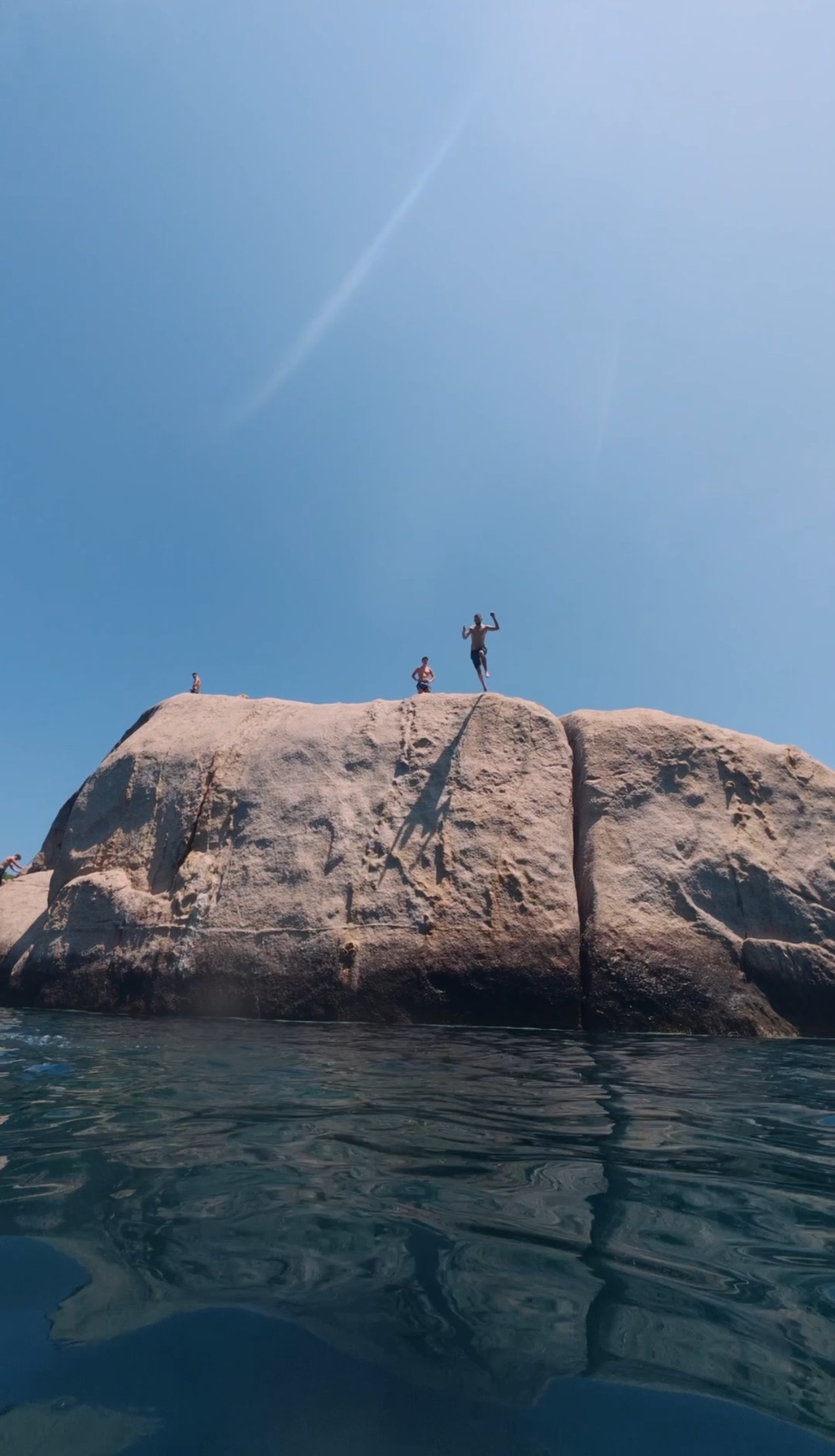
Everyone talks about the jump. Almost nobody mentions the climb.
Koh Tao cliff jumping means one place: Tanote Bay, on the island’s east coast, home to the most famous jumping rock on Koh Tao. The jump itself is a clean 6-metre drop into deep water. Getting up there (over loose boulders, then hand-over-hand up a hanging rope) is the part that actually tests you. Most people who climb up end up jumping simply because climbing back down is harder than letting go. For the full picture of the island beyond this one bay, start with our complete Koh Tao guide.
This guide covers the jump itself: height, water depth, real hazards, and the rest of Tanote Bay, because the cliff is genuinely one part of a full beach day here. Snorkelling, food, getting there without overpaying a taxi driver: all of it below.
Koh Tao cliff jumping happens at Tanote Bay on the east coast, free to access. The jump spot sits around 6 metres above the water, reached by climbing roughly 8 metres up boulders and a hanging rope. Water below is 8 to 10 metres deep depending on tide. It’s entirely at your own risk (no lifeguards, no supervision) and best suited to decent climbers who are also confident swimmers.
Table of Contents
Cliff Jumping at Tanote Bay: What It’s Actually Like
The jumping rock sits at the edge of Tanote Bay, and getting to the top is not a walk-up. You start by scrambling over the boulders beneath the main rock (hands and feet, no path, no steps) and from there a large rope hangs down from the top for the final pull-up. That’s the real test of Koh Tao cliff jumping: the climb is harder than the jump, and by most accounts, climbing back down is harder still. It’s part of why almost everyone who makes it to the top ends up jumping instead of reversing the climb.
None of this is staffed. There’s no attendant checking who climbs, no one telling you when it’s safe, and no rescue boat idling nearby. It’s a natural rock formation that locals and travellers have been using for years, and the responsibility for judging the climb, the jump, and the day’s conditions sits entirely with the person on the rope. That’s not a warning designed to scare you off. It’s just the honest setup, and it’s exactly why the next two sections matter more than the hype.
Guests who’ve done it come back describing two things: how thrilling the actual jump is, and how genuinely proud they feel making it to the top. The achievement is in the climb, not just the fall.
How High Is the Jump?
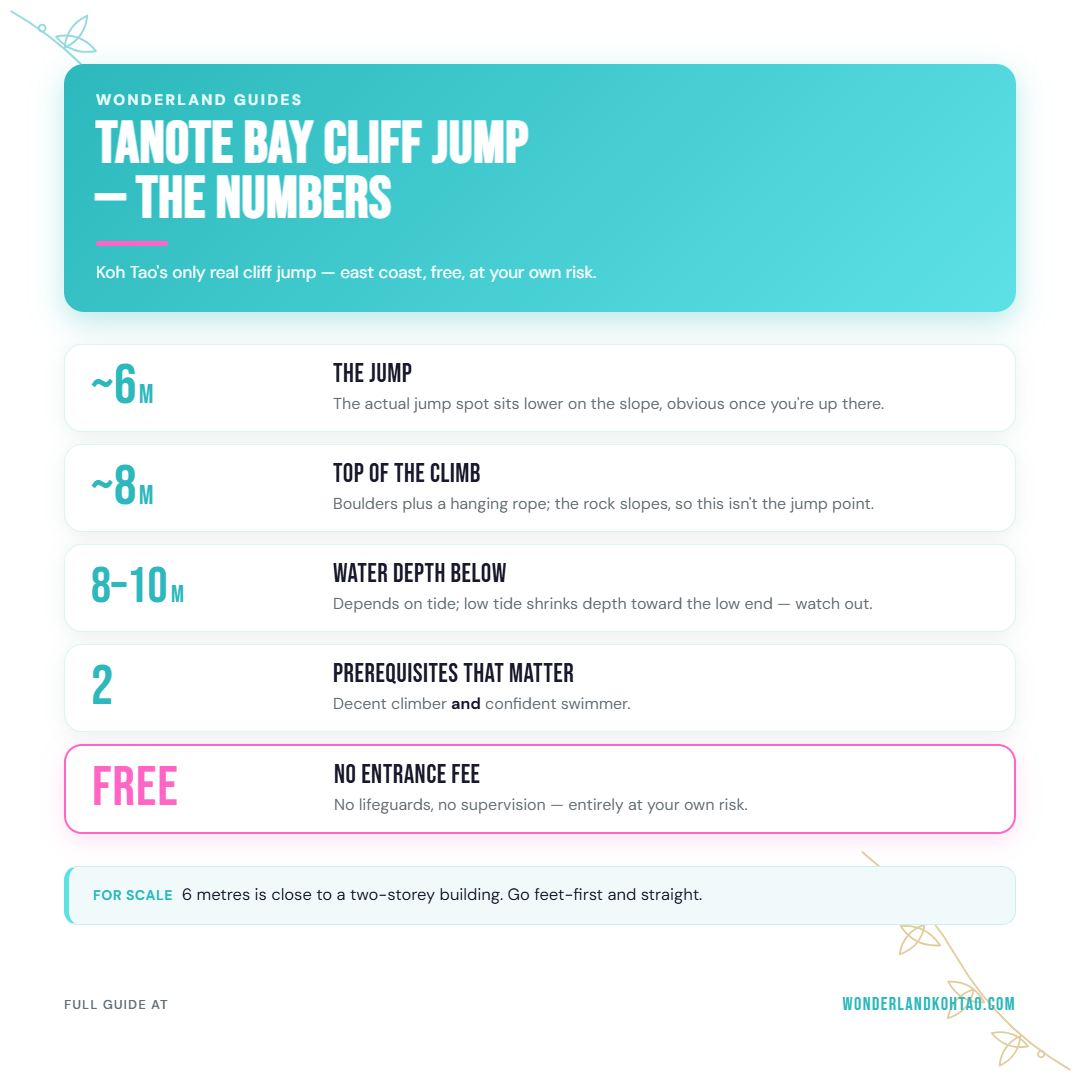
The rock slopes as it rises, so the numbers change depending on where you’re standing. At the very top of the climb you’re at roughly 8 metres of elevation, but the actual jumping spot, which becomes obvious once you’re up there, sits lower on the slope at around 6 metres above the water. The water underneath runs 8 to 10 metres deep depending on the tide, which is enough depth for a clean jump as long as you go in feet-first and straight.
Tanote Bay Cliff Jump: The Numbers
Top of the climb: ~8 m elevation (the rock slopes, so this isn’t the jump point)
Actual jump spot: ~6 m above the water (obvious once you’re at the top)
Water depth below: 8 to 10 m, depending on tide
Getting up: boulder scramble, then a hanging rope for the final pull
Supervision: none, entirely at your own risk
For scale, a 6-metre jump is close to the height of a two-storey building, and hitting still, deep water at that height is enough to make most people hesitate at the edge even after climbing all the way up. That hesitation is normal. It’s also why decent swimmers and decent climbers are the two prerequisites that matter most here, covered next.
Is It Safe? The Honest Version
Koh Tao cliff jumping at Tanote Bay is fine on most days for people who fit two conditions: decent climbers, and decent swimmers. Once you’ve jumped, whatever happens next is on you: there’s no one watching, no first-aid station, and no formal warning system beyond word of mouth. The single biggest variable is the tide: it’s fine to jump most days, but low tide is when people should watch out, since water depth at the bottom shrinks toward the lower end of that 8 to 10 metre range.
The injuries that actually happen here aren’t dramatic exaggerations. They’re specific and repeatable. People fall from the rope on the way up and get hurt on the rock underneath them. People belly flop on the way down, which at 6 metres is a genuinely painful landing. And the third one is the sneakiest, because it happens in the shallows on the way in and out, not on the jump at all.
Heads Up: Sea Urchins
Don’t stand on the coral. Sharp coral edges are one problem, but sea urchins hiding underneath are the real hazard: the spines go straight through the sole of a foot and have sent visitors to hospital. Wade carefully, keep your eyes down in the shallows, and wear water shoes if you have them.
None of this is meant to talk anyone out of it. Thousands of people jump here without issue every year. It’s meant to set expectations correctly: this is a real cliff with real consequences for a bad climb, a bad landing, or a careless step in the shallows, not a curated adventure-park activity with a safety briefing. Come prepared, respect the tide, and the odds are very much in your favour.
Getting to Tanote Bay
The road to Tanote Bay is hilly, but it’s a proper concrete road the whole way: no dirt tracks, no rough patches that need a specific bike. Most visitors ride a rental scooter across the island rather than pay for a taxi, and that’s the right call: Tanote sits further from the main towns than most beaches on Koh Tao, and taxi drivers charge more accordingly. If you’re relying on taxis for the rest of your trip, budget for a higher fare on this one specifically.
Local Tip: Which Turn to Take
Tanote Bay has more than one access road. The best way in is the second turn, via Diamond Beach Resort Road: it gets you closest to the beach and parking is obvious once you arrive, since there are usually plenty of bikes already parked there.
There’s no entrance fee to Tanote Bay itself. You ride in, park with the other scooters, and walk onto the sand. Parking isn’t formalised, but it’s easy to spot: follow the bikes. Once you’re set up on the beach, the jumping rock is a short walk along the shoreline, easy to find by sight since it’s the obvious rock formation with people climbing on it.
Tanote Bay Beyond the Jump
Tanote Bay koh tao is worth the ride even without the cliff. Snorkelling here is genuinely good: a wide variety of coral, plenty of fish, and water vibrant enough that it holds its own against the island’s better-known snorkel spots. Our full snorkelling Koh Tao guide ranks Tanote among the island’s stronger shore-snorkel bays, alongside Aow Leuk and Hin Wong.
That combination (a proper snorkel and a proper cliff jump, in the same bay, for free) is what makes Tanote different from a lot of Koh Tao’s other beaches. You don’t need to choose between a relaxed swim and an adrenaline hit; the bay gives you both within a hundred metres of each other. Bring your own mask if you have one, since rental gear on the beach is functional but not always well-fitted. If you want to go beyond snorkelling gear entirely, our Koh Tao diving guide covers the nearby dive schools, course prices, and which sites are worth certifying for.
There genuinely isn’t a comparable cliff-jumping spot anywhere else on the island. Tanote is the iconic one. Other rocky patches exist along the coastline, but nothing else on Koh Tao has the combination of accessible height, deep water, and an established rope that makes Tanote the spot everyone means when they say “cliff jumping” here.
A Full Water Day, Sorted at Reception
Ask at Wonderland’s reception for the day’s conditions before you ride out: we’ll point you to the second turn, the snorkel gear, and whether it’s a good tide for the jump.
Check AvailabilityFood at Tanote Bay
There are a handful of restaurants right on the beach at Tanote, which means you don’t need to pack much beyond the basics. Poseidon Restaurant is the local favourite: a solid, reliable option for lunch after a swim or a jump. Bring your own beach essentials and snacks if you want to be self-sufficient, but honestly, the restaurants cover most of what you’d need for a full day at the bay.
Make It a Full Day
The easiest way to do Tanote Bay properly: snorkel in the morning while the water’s calm, jump off the rock once you’ve built up to it, eat lunch at Poseidon or one of the other beachfront spots, and finish with a massage before you ride back. Charan Massage sits right at Tanote Bay, a beachfront setup that pairs naturally with the day’s other adventure, whether that’s the cliff or the snorkel.
Some days, Wonderland hosts group beach days where a batch of guests heads out together, and some of those days land at Tanote Bay specifically. It’s worth asking at reception what’s planned for the week if you’d rather not ride out solo.
When to Go
Most days at Tanote Bay are fine for cliff jumping. The main thing to watch is the tide, since low tide shrinks the water depth below the rock. If you’re not sure what the tide’s doing, ask at reception or check locally before you ride out; there’s no posted schedule at the bay itself. Search interest in Koh Tao cliff jumping peaks in July, which lines up with the general summer travel season on the island. Expect more people at the rock and on the beach during that stretch. For the island’s broader weather patterns across the year, see our best time to visit Koh Tao guide.
Koh Tao Cliff Jumping: FAQ
The rock slopes as it rises, so the top of the climb sits around 8 metres, but the actual jump spot lower on the slope is around 6 metres above the water. Water depth below is 8 to 10 metres depending on the tide.
Yes. There’s no entrance fee for Tanote Bay and no charge to climb or jump the rock. Parking is free and informal: just follow where the other scooters are parked.
It carries real risk and there’s no supervision: it’s entirely at your own risk. The most common injuries are falls from the rope onto the rock, belly flops on landing, and cuts or sea urchin punctures from stepping on coral in the shallows. Most people jump without issue, but it isn’t a staffed, risk-free activity.
It’s suited to decent climbers and decent swimmers rather than complete beginners at either skill. The climb over the boulders and up the rope is the harder part: if you’re not confident scrambling over rock or swimming in open water, this isn’t the place to test both at once.
Climbing back down is genuinely harder than jumping, which is exactly why most people who make it to the top choose to jump. It’s still possible to climb down if you decide against it, but expect it to test you more than the ascent did.
Yes: Tanote has a lot of coral variety, plenty of fish, and noticeably vibrant water. It’s one of the stronger shore-snorkel spots on Koh Tao, and pairs naturally with a cliff jump on the same beach day. See our snorkelling Koh Tao guide for the full ranked list of spots.
Worth the Ride
The stories that come back to the common room after a Tanote day follow a pattern: the ride out took longer than expected, the climb was harder than it looked from the beach, and the jump itself was over in about two seconds but somehow still the thing they talk about for the rest of the trip. That’s Koh Tao cliff jumping in a sentence: a short, sharp moment that takes a proper climb to earn.
Your stay funds free education through Horizon Asia
Book Direct & Save
Ask at reception before you ride to Tanote: conditions, the best turn-off, and whether anyone else is heading that way that day.
Book Direct & SaveBest price guaranteed. 1,300+ guest reviews. Chalok Beach is a couple of minutes’ walk.
Keep Reading
The Complete Koh Tao Guide (hub)→ Best Beaches in Koh Tao: which bays are worth the scooter ride→ Snorkelling in Koh Tao: the 7 best spots, gear, and tips→ Shark Bay Koh Tao: turtles, snorkelling, and the clearest water on the island→ Best Things to Do in Koh Tao: beyond the beaches→ Best Massage in Koh Tao: where we actually go, 300 to 400 THB→ Hiking Trails in Koh Tao: John Suwan, Laem Thian, and the routes locals walk→